

Open Interest Explained - A Crypto Trader's Guide

In the volatile world of cryptocurrency, understanding market dynamics is paramount. Amidst the noise of price fluctuations and speculative trading, a key metric often overlooked by newcomers offers profound insights into market sentiment and potential future movements: Open Interest. This guide cuts through the complexity, providing clarity on what Open Interest is and why it matters for every serious crypto trader.
Core Definition
Open Interest (OI) in cryptocurrency derivatives markets represents the total number of outstanding or unsettled futures or options contracts.
Unlike trading volume, which measures the number of contracts traded over a period, OI quantifies the total number of active contracts held by market participants at any given time, indicating the amount of capital flowing into or out of a specific derivative market.
Why It Matters
Market Strength: Rising OI alongside increasing prices often signals strong buying pressure and confirms an uptrend. Declining OI during a price drop can indicate weakening bearish sentiment.
Liquidity Indicator: Higher OI generally correlates with increased liquidity, allowing easier trade execution without significant price impact.
Sentiment Analysis: Increases in OI often precede significant price moves as more capital enters the market.
Potential Reversals: Divergences between price and OI may foreshadow weakening momentum and possible trend reversals.
How It Works
Contract Creation: When a new futures or options contract is opened, OI increases by one.
Contract Closure: When a contract is closed, OI decreases by one.
Transfer of Ownership: If a contract changes hands without being closed, OI remains unchanged.
Market Interpretation: Analysts monitor OI changes with price and volume to assess trend sustainability.
Example
Bitcoin perpetual futures OI on Monday: 100,000 contracts
On Tuesday:
10,000 new longs opened
5,000 shorts closed
Net increase: +5,000 contracts
New OI: 105,000 contracts
If price rises with OI → strong conviction and uptrend confirmation.
If price rises but OI falls → weak participation and possible exhaustion.
Common Mistakes
Confusing OI with trading volume
Ignoring price action
Over-relying on OI alone
Failing to differentiate futures vs options
Quick Checklist
Is OI increasing or decreasing?
Does it confirm the price direction?
Is there divergence?
How does current OI compare to historical levels?
Are major events approaching?
Related Terms
Futures Contracts
Options Contracts
Trading Volume
Market Depth
Liquidity
Derivatives Exchange
FAQs
What is Open Interest in crypto?
Total number of active derivative contracts.How does it differ from volume?
Volume measures contracts traded over time; OI measures total active contracts.Is increasing OI always bullish?
No. Rising OI + rising price = bullish. Rising OI + falling price = bearish pressure.Can it apply to all cryptocurrencies?
Primarily relevant to assets with active derivatives markets.What does decreasing OI mean?
Positions are closing; possible weakening trend or profit-taking.
Share Transmission
Broadcast this signal to your network
More News

Tom Lee’s Ethereum Investment Explained: The BitMine Play
Tom Lee is turning BitMine (BMNR) into a giant Ethereum treasury aiming to own 5% of all ETH. Learn how the strategy works, why it matters, and its risks.
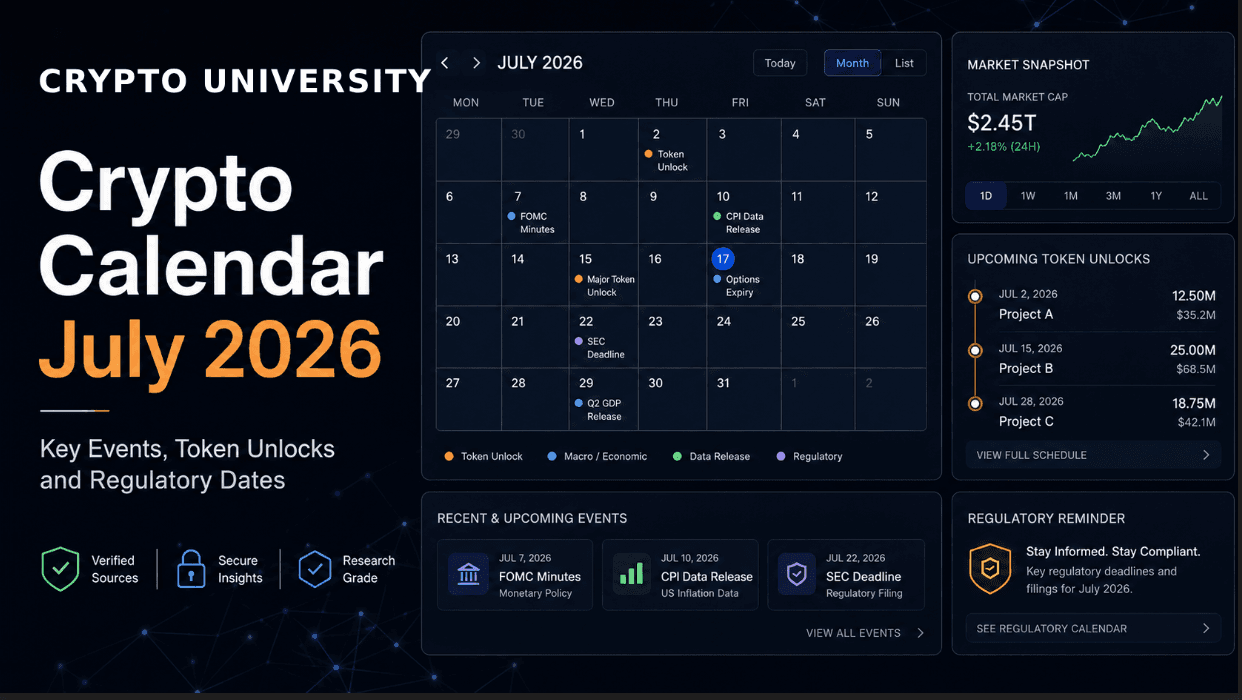
Crypto Calendar July 2026: Key Events, Token Unlocks and Regulatory Dates
A neutral guide to the July 2026 crypto calendar, covering MiCA and GENIUS Act deadlines, Japan’s new law, major token unlocks, Fed dates and industry events.
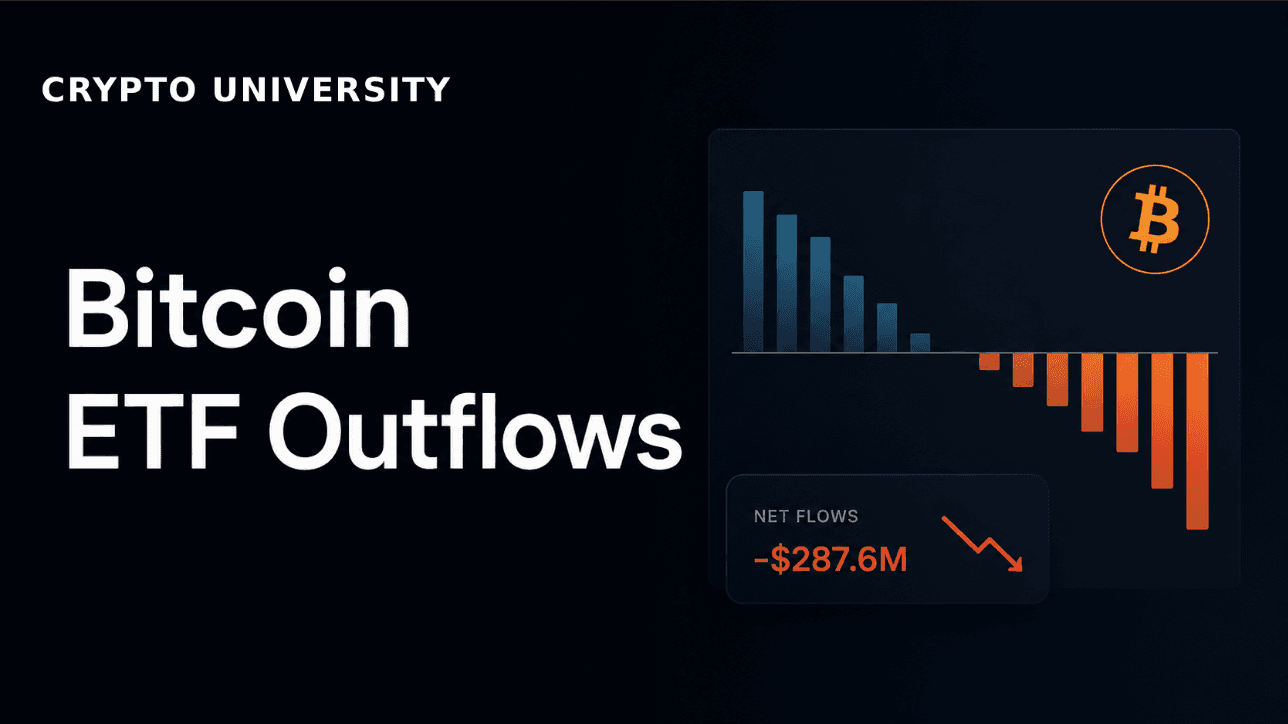
What Are Bitcoin ETF Outflows? How They Work and Why They Matter
Learn what Bitcoin ETF outflows are, how they affect Bitcoin's price, and what drove the record outflow streak in May-June 2026. A clear, jargon-free explainer.